
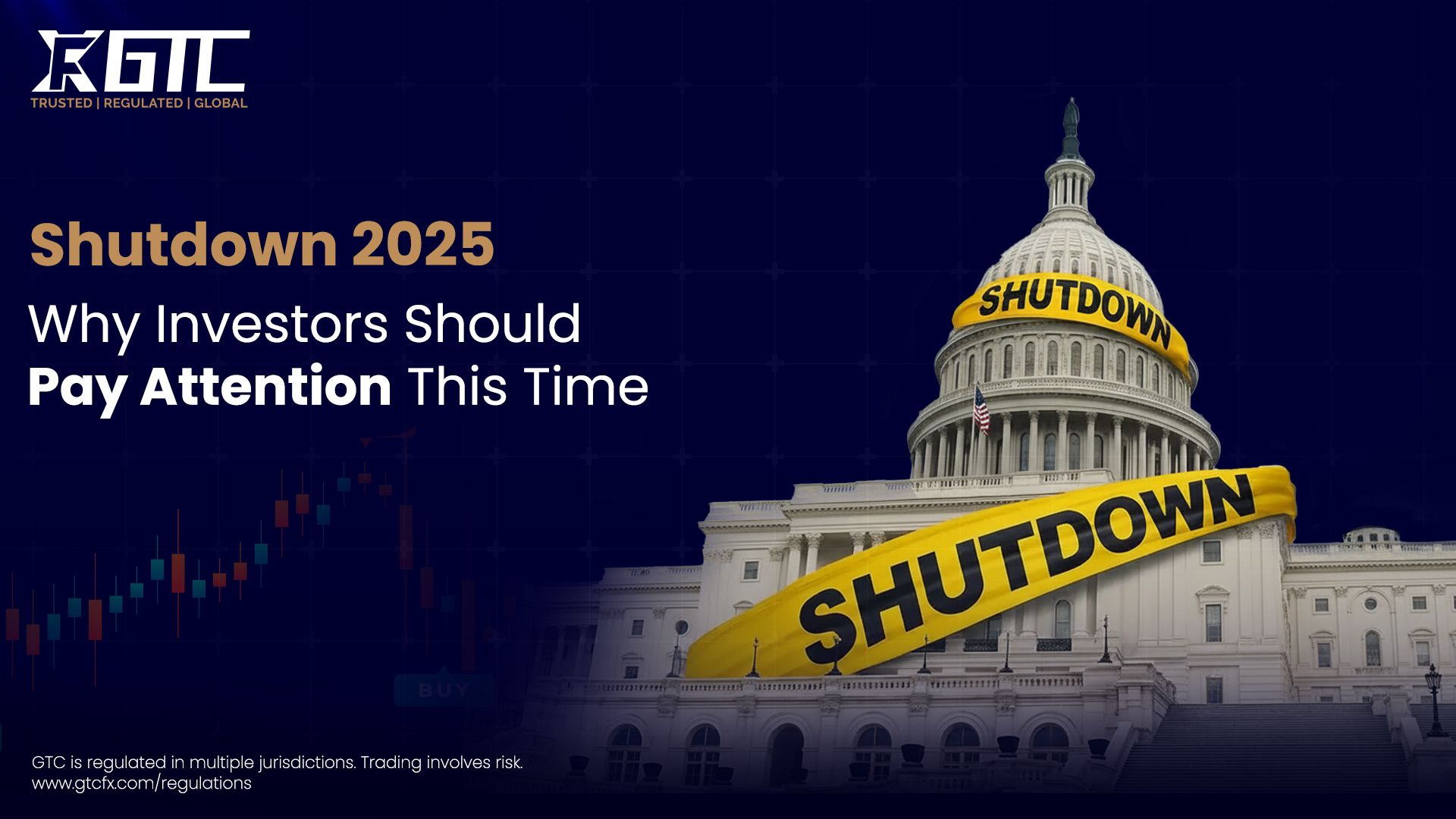
The US federal government began a shutdown on October 1, 2025, after failing to pass a funding bill due to sharp disputes over healthcare provisions, notably enhanced tax credits under the Affordable Care Act and Medicaid funding. Essential services including Social Security, Medicare, and military operations will continue, but most non-essential services are suspended, leaving hundreds of thousands of federal employees furloughed or unpaid.
Shutdown Drivers and Political Dynamics
- • The primary cause is disagreement between Democrats wanting healthcare expansions and Republicans led by President Donald Trump opposing those measures in funding legislation.
- • Both parties are blaming each other, with Trump using the shutdown as leverage to shrink public sector positions favored by Democrats.
History as a Guide
The U.S. has seen 21 shutdowns since 1976, but three in particular left a footprint on markets:
- • 2018–2019 shutdown (35 days): The S&P 500 dropped nearly 8% in December before rebounding sharply as a funding deal approached. During the entire shutdown window, the market was already amid a broader correction, with a total decline of about 20% from late September to Christmas Eve 2018. On December 24, 2018, the S&P 500 plunged intraday to its bear market low.
- • 2013 shutdown (16 days): The S&P 500 fell about 4% in the ten trading days leading up to and during the shutdown, though it recovered quickly after a deal was reached.
- • 1995–1996 shutdown (26 days): The S&P 500 experienced mild pressure, declining around 3–4% during the two combined shutdown periods, and rebounded after resolution.
Markets have historically shrugged off shutdowns as short-term political noise. Yet for shutdowns surpassing 10 days, mild to moderate dips occurred.
Economic Data at Risk
The Bureau of Labor Statistics (BLS), responsible for crucial reports including Nonfarm Payrolls (NFP) and inflation numbers (such as CPI), will suspend nearly all operations during the shutdown. This means:
- • The September Nonfarm Payroll data, scheduled for release in early October, will likely be delayed, or publication may be postponed until funding is restored. This postponement creates a gap in vital labor market data that markets and policymakers closely watch.
- • Inflation data releases, including the Consumer Price Index (CPI), are also at risk of delay if the shutdown extends into mid-October or longer, impacting Fed decision-making.
- • Other economic indicators like retail sales from the Census Bureau could face delays as well, compounding the lack of timely data.
Effects on GDP and Economic Growth
- • The shutdown causes a direct drag on GDP growth due to furloughs of up to 750,000 federal employees and suspension of government activities. Estimates suggest the shutdown could shave off 0.1 to 0.2 percentage points of GDP growth per week it lasts.
- • A White House memo warns of a $15 billion weekly GDP loss if the shutdown persists.
- • Consumer and business confidence may soften as government services halt.
- • While mandatory spending programs such as Medicare and Medicaid continue, disruptions in federal operations and consumer/business confidence could slow growth temporarily.
Broader Market and Policy Implications
- • The Federal Reserve faces increased uncertainty in setting interest rates, as key inflation and employment data may be missing or delayed ahead of the next FOMC meeting scheduled for late October.
- • Markets often exhibit increased volatility on the absence or delay of such critical economic data, adding to investor caution during shutdown periods.
Next Congressional Vote
- • The Senate is scheduled to revisit funding bills and continue negotiations with their next votes expected on Friday, October 3, 2025.
- • Lawmakers are likely to consider the same Democratic and Republican proposals that failed earlier this week, as neither side has yet made significant concessions.
- • There are indications that votes and negotiations could extend through the weekend if no agreement is reached on Friday.
Unlike many past shutdowns, the 2025 standoff comes at a moment of heightened economic sensitivity. Inflation remains elevated, the Federal Reserve is navigating a narrow path with interest rates, and consumer confidence is already under pressure. The combination of delayed labor and inflation data, ongoing geopolitical tensions, and lingering debt ceiling concerns means that the usual short-term political noise could have more pronounced ripple effects across markets and the real economy.
Disclaimer
The information in this article is for general information only and does not represent financial or investment advice. Markets are unpredictable, and past performance does not guarantee future results. Before making any financial decisions, please do your own research or consult a licensed financial advisor. We are not responsible for any loss or damage caused by reliance on this content.