What Is the Strongest Currency
in the World? (2026)
"Strongest" means the nominal exchange value of one unit of a currency against the US dollar. It does not mean the country has the largest economy or that its currency has the highest purchasing power.
QUICK GUIDE
Explore this article
+
💡 Key Takeaway
- The strongest currency in the world, measured by how many US dollars one unit can buy, is the Kuwaiti dinar (KWD). It is followed by the Bahraini dinar (BHD), Omani rial (OMR), Jordanian dinar (JOD), and British pound (GBP).
- The strongest currency in the world is not automatically the best currency to trade. A high face value can result from a fixed exchange-rate policy, a small currency supply, or the way the currency unit is denominated. For traders, what matters more is liquidity, volatility, interest-rate expectations, and risk management.
Top 5 Strongest Currencies in 2026
"Strongest" means the nominal exchange value of one unit of a currency against the US dollar. It does not mean the country has the largest economy or that its currency has the highest purchasing power.
Kuwaiti Dinar (KWD)
The Kuwaiti dinar is the strongest currency in the world by nominal value. One KWD buys more than three US dollars. Kuwait's currency is managed against a basket of currencies rather than fixed solely to the US dollar, helping authorities balance stability with flexibility.
Bahraini Dinar (BHD)
The Bahraini dinar is closely pegged to the US dollar. Its high nominal value reflects the chosen exchange-rate regime, rather than a currency that freely rises and falls every day against the dollar.
Omani Rial (OMR)
The Omani rial is also pegged to the US dollar at a high nominal rate. Oman's energy sector and long-standing currency framework have helped support this arrangement.
Jordanian Dinar (JOD)
The Jordanian dinar is pegged to the US dollar and maintains a value above one dollar per dinar. Unlike Kuwait, Bahrain, and Oman, Jordan is not a major oil exporter, so its currency's value cannot be explained by energy exports alone.
British Pound (GBP)
The pound is the highest-valued major freely traded currency in this list. Unlike the Gulf pegs, GBP moves freely against the US dollar and responds to UK economic data, Bank of England policy, and global risk sentiment.
Top 10 Strongest Currencies in 2026
For more, here're the top 10 strongest currencies in 2026:
Indicative values as of 1–2 September 2026. Rates move continuously. The table uses representative central-bank and IMF data; currencies fixed at parity with GBP are treated as GBP-equivalent rather than ranked separately. IMF representative rates, Bank of Russia rates, and Bank of Israel rates provide the underlying reference values.
Why Are Middle Eastern Currencies Valued So High?
As shown above, three of the top five "strongest" currencies are Middle Eastern currencies. This concentration is no coincidence: exchange-rate policies, energy-export revenues, and limited speculative trading all help explain their high nominal values.
Fixed US Dollar Pegs
Bahrain, Oman, and Jordan maintain fixed exchange-rate relationships with the US dollar. To maintain a peg, a central bank needs sufficient foreign-currency liquidity, reserves, credible policy, and confidence in its ability to supply or absorb its own currency when necessary.
A peg reduces exchange-rate volatility against the dollar; it does not eliminate all economic risk. Kuwait is a notable exception: its dinar is managed against a currency basket, not fixed directly to USD.
Energy Export Dominance
For major Gulf energy exporters, dollar-priced oil and gas sales generate foreign-currency earnings and can strengthen external balances. These inflows help support reserves and the broader policy framework behind a currency peg.
This explanation is most relevant to Kuwait and Oman. It should not be applied broadly to every high-valued Middle Eastern currency, particularly the Jordanian dinar.
Low Global Speculative Liquidity
These currencies are rarely the focus of retail forex speculation compared with EUR/USD, GBP/USD, or USD/JPY. Limited speculative trading can mean fewer rapid market-driven swings, especially where exchange controls or pegs are in place.
Low liquidity does not itself make a currency valuable. Instead, it means the official exchange rate is less exposed to constant speculative pressure than a major floating currency.
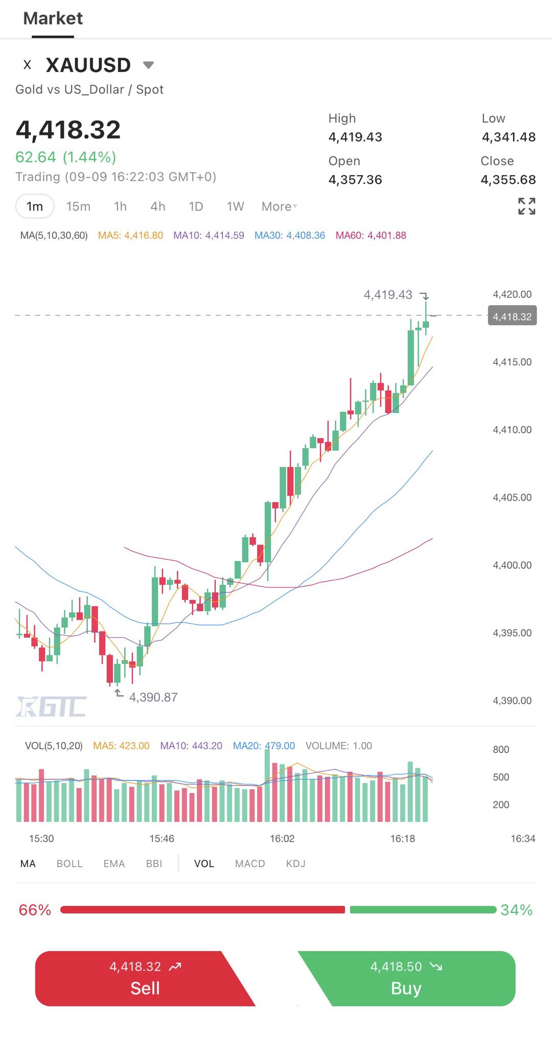
What Factors Actually Influence Floating Currency Strength?
Central Bank Interest Rates
Higher interest rates can attract international capital seeking better returns from deposits and bonds. When demand for a country's assets rises, demand for its currency may also rise.
This relationship is not automatic. Markets also consider inflation, future rate expectations, debt levels, and economic risk.
Macroeconomic Trade Balances
Countries with sustained export surpluses may experience steady foreign demand for their currency because overseas buyers need it to pay for local goods and services. A trade surplus is not a guarantee of appreciation, but it can support a currency over time.
Geopolitical Stability
During periods of global uncertainty, institutional investors often seek currencies perceived as relatively stable. The Swiss franc and US dollar are common safe-haven examples. This demand can support them even when they are not the highest-valued currencies on a per-unit basis.
Currency Hedging Strategies
Currency Pairing Mechanics
Forex is traded in pairs. When a trader buys EUR/USD, they are simultaneously long the euro and short the US dollar. When they sell EUR/USD, they are short the euro and long the US dollar.
This is the core of currency hedging: an exchange-rate position is always relative to another currency. A business with future euro expenses, for example, may use an appropriate currency pair to reduce exposure to adverse EUR/USD movements.
Margin and Leverage Operations
Margin is the deposit required to open and maintain a leveraged position. For example, a $100,000 position with a 3% margin requirement requires $3,000 in margin, equivalent to about 33:1 leverage.
Leverage can magnify gains and losses. GTCFX explains that margin requirements depend on the instrument, position size, leverage, and market conditions, while its dynamic-leverage model can reduce available leverage as position size increases.
Forex Margin & Risk Simulator
Use the simulator to select a currency pair, lot size, leverage level, stop-loss distance, and account balance. Readers should be able to see how small pip movements can affect required margin, unrealised profit or loss, and total capital at risk.
🏁 Conclusion
The Kuwaiti dinar is the strongest currency in the world in 2026 by nominal value against the US dollar. Yet traders should look beyond the headline ranking. Currency policy, trade balances, interest rates, liquidity, and geopolitical conditions are more useful for understanding exchange-rate movements.
To explore forex markets, review live currency-pair quotes and assess margin requirements before trading. Visit GTCFX's official forex page for its available currency pairs and trading conditions.
Frequently Asked Questions
Is the strongest currency the best one to trade?
No. A high nominal value does not guarantee liquidity, volatility, tight spreads, or trading opportunity. Major currency pairs are often more practical for active traders because they tend to have deeper liquidity and more consistent pricing.
Why isn't the US dollar the strongest currency?
The US dollar equals one dollar by definition. Its nominal value is lower than KWD or BHD per unit, but it remains the world's dominant currency for trade, reserves, and international finance. Nominal exchange value and global importance are different measures.
Can a fixed-peg currency collapse?
Yes. A peg can be devalued, adjusted, or abandoned if a country cannot maintain sufficient reserves, suffers severe external pressure, or loses market confidence. A fixed rate is a policy commitment, not a permanent guarantee.
Risk Warning
This content is for educational purposes only and does not constitute financial advice. Trading involves significant risk, and you may lose your capital.
GTCFX operates as a multi-regulated group of companies. Clients are kindly advised to confirm the specific legal entity, regulation and jurisdiction under which they are being onboarded.
Forex and CFD trading involve significant risk. Leverage can amplify losses as well as gains. This article is for educational purposes only and is not investment advice.