

When Does Forex Market Open? (2026 Update)
Learn when the forex market opens and closes, how Sydney, Tokyo, London and New York sessions work, and how overlaps, DST and holidays affect trading activity.
SEP 18, 2026
00
Blogs
Last updated: august 13, 2026 at 12:53 pm
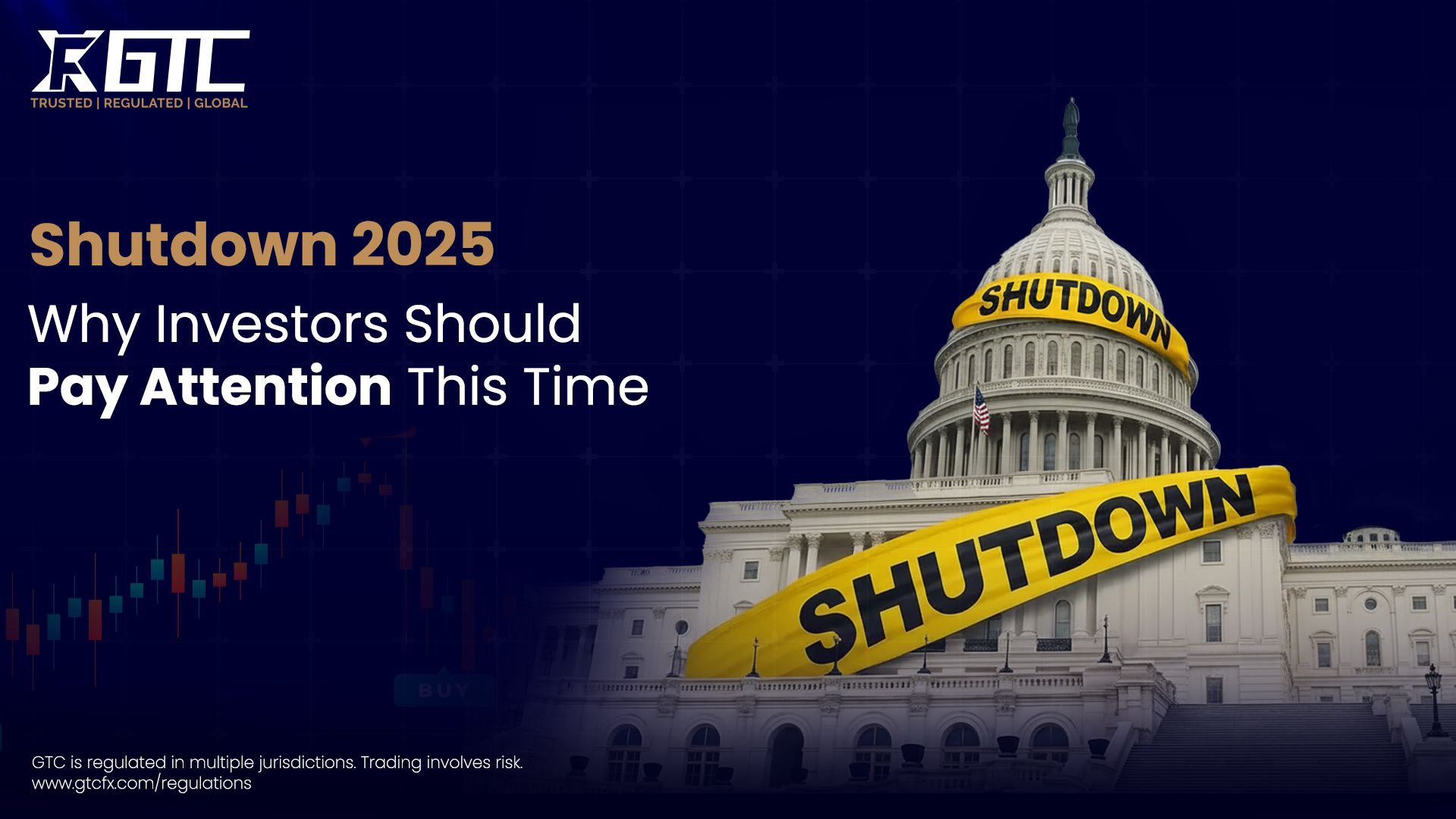
The US federal government began a shutdown on October 1, 2025, after failing to pass a funding bill due to sharp disputes over healthcare provisions, notably enhanced tax credits under the Affordable Care Act and Medicaid funding. Essential services including Social Security, Medicare, and military operations will continue, but most non-essential services are suspended, leaving hundreds of thousands of federal employees furloughed or unpaid.
The U.S. has seen 21 shutdowns since 1976, but three in particular left a footprint on markets:
Markets have historically shrugged off shutdowns as short-term political noise. Yet for shutdowns surpassing 10 days, mild to moderate dips occurred.
The Bureau of Labor Statistics (BLS), responsible for crucial reports including Nonfarm Payrolls (NFP) and inflation numbers (such as CPI), will suspend nearly all operations during the shutdown. This means:
Unlike many past shutdowns, the 2025 standoff comes at a moment of heightened economic sensitivity. Inflation remains elevated, the Federal Reserve is navigating a narrow path with interest rates, and consumer confidence is already under pressure. The combination of delayed labor and inflation data, ongoing geopolitical tensions, and lingering debt ceiling concerns means that the usual short-term political noise could have more pronounced ripple effects across markets and the real economy.
The information in this article is for general information only and does not represent financial or investment advice. Markets are unpredictable, and past performance does not guarantee future results. Before making any financial decisions, please do your own research or consult a licensed financial advisor. We are not responsible for any loss or damage caused by reliance on this content.
Add as a preferred source on Google
Learn when the forex market opens and closes, how Sydney, Tokyo, London and New York sessions work, and how overlaps, DST and holidays affect trading activity.
SEP 18, 2026

In forex trading, timing can make the difference between a smart entry and a costly mistake. But with prices moving constantly, how can traders spot meaningful…
SEP 18, 2026

Explore the strongest currencies in 2026 by nominal value, including the Kuwaiti dinar, Bahraini dinar, Omani rial, Jordanian dinar and British pound, plus the…
SEP 17, 2026
-Open Your Account in Minutes-
Get instant access to global markets, advanced charting, and expert insights. Whether you're a beginner or a professional, your next opportunity starts here. Secure, regulated, and transparent.