博客
指数交易的第一步——新交易者开始前应该知道的事项
指数交易对初学者来说可能很有吸引力,因为单笔交易可以提供对一大批公司的敞口,而不仅仅是单只股票。但在下达第一笔订单之前,重要的是要了解指数如何运作、什么推动其价格变动,以及杠杆如何影响收益和损失。
CFDs are highly speculative, leveraged instruments. Trading in CFDs carries a high degree of risk to your capital. Investors should ensure they possess adequate market knowledge or seek independent financial advice before executing trades.
Unlike traditional stock exchanges that operate during fixed local hours, the foreign exchange market follows a global network of financial centers that keeps trading active throughout the week.

Unlike traditional stock exchanges that operate during fixed local hours, the foreign exchange market follows a global network of financial centers that keeps trading active throughout the week. The forex market generally opens on Sunday evening and closes on Friday afternoon, providing nearly continuous access across different time zones.
However, 24-hour availability does not mean market conditions remain the same throughout the day. Liquidity, volatility, and trading activity change as Sydney, Tokyo, London, and New York sessions open and close. So what to consider in forex trading? Keep scrolling.
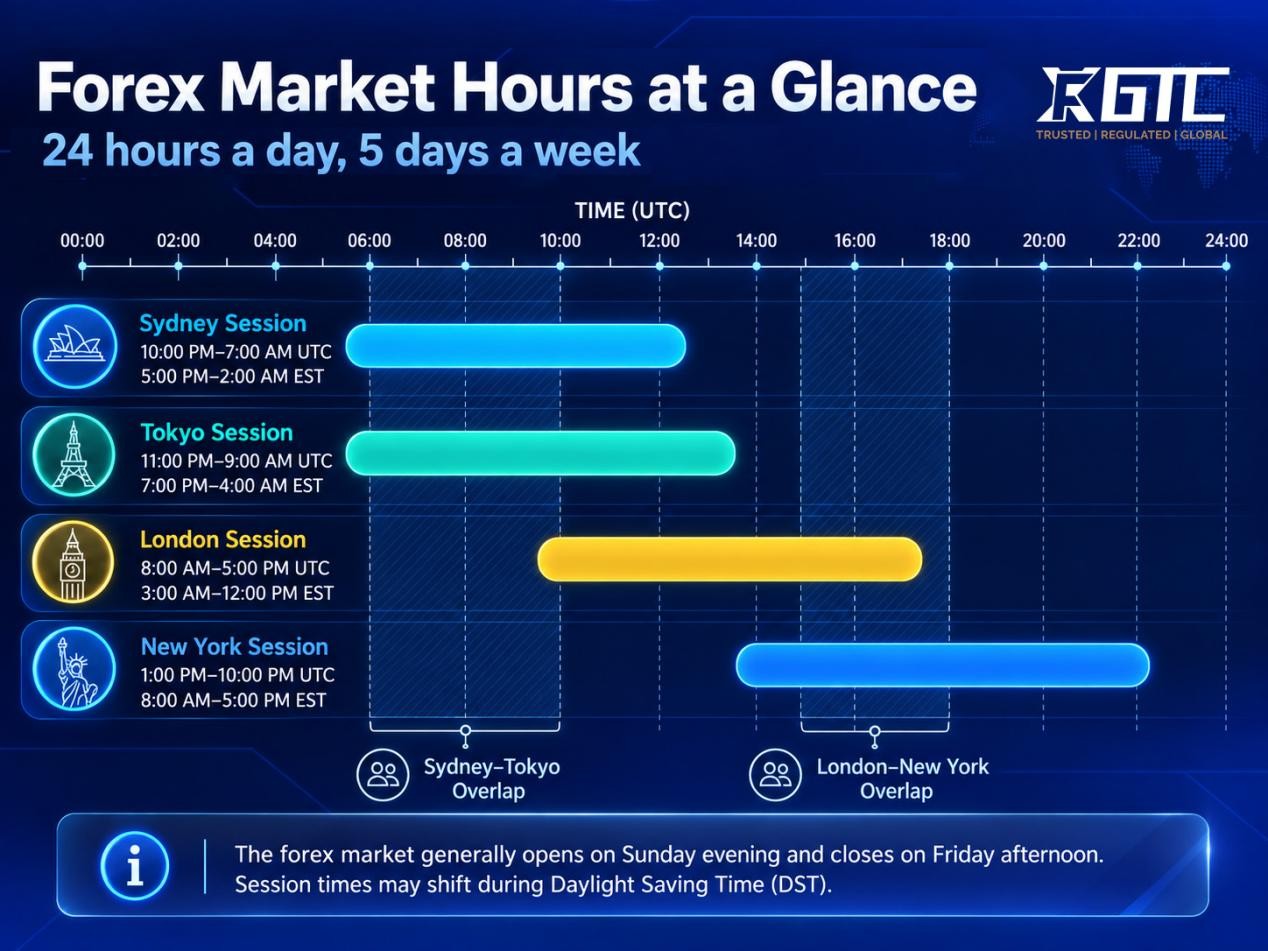
The forex market is divided into four major trading sessions based on the world's leading financial centers: Sydney, Tokyo, London, and New York. Each session reflects regional market participation and may have different levels of liquidity, volatility, and currency focus.
Forex is a decentralized market, there is no single exchange that controls global opening and closing times. Instead, trading activity moves from one financial hub to another as the global trading day progresses.
UTC 10:00 PM–7:00 AM · EST 5:00 PM–2:00 AM · Hub: Australia / New Zealand · Watched: AUD, NZD
UTC 11:00 PM–9:00 AM · EST 7:00 PM–4:00 AM · Hub: Japan / Asia · Watched: JPY, AUD, NZD
UTC 8:00 AM–5:00 PM · EST 3:00 AM–12:00 PM · Hub: United Kingdom / Europe · Watched: EUR, GBP, CHF
UTC 1:00 PM–10:00 PM · EST 8:00 AM–5:00 PM · Hub: United States / North America · Watched: USD, CAD
Note: Forex session times may shift depending on Daylight Saving Time (DST) changes and the trader's selected time zone.
The London-New York overlap is widely monitored because two of the largest forex markets operate simultaneously.
This period typically occurs around:
During this overlap, liquidity often increases because European and North American participants are active at the same time. Major currency pairs, including EUR/USD and GBP/USD, may experience higher trading volume and more noticeable price movements.
Traders researching trading session times EST often pay attention to this period since it aligns with major US economic announcements and active European market hours.
However, increased activity does not automatically indicate favorable conditions for every strategy. Some traders prefer higher volatility, while others may focus on calmer market environments.
The Sydney-Tokyo overlap represents the transition between Australian and Asian market activity.
During this period:
Although this overlap generally has lower activity than the London-New York period, it can still be relevant for traders focusing on Asia-Pacific currencies.
Some periods of the trading day experience lower participation because major financial centers are between sessions. Lower liquidity may affect:
For example, the period after New York closes and before Asian markets become fully active often sees reduced market participation.
Therefore, you should monitor these periods carefully, especially when trading strategies depend on short-term price movements.
Forex trading hours are global, but displayed session times can change because, you know, countries follow different time zone rules. Holidays can also affect liquidity because fewer institutional participants may be active in the market.
Daylight Saving Time creates seasonal changes in how trading hours appear across regions. While financial markets usually maintain their local operating schedules, the conversion between time zones can shift during DST transitions. For example:
These differences can affect traders who follow specific session schedules, economic releases, or automated trading systems. Professional trading systems often use Coordinated Universal Time (UTC) internally to reduce confusion caused by seasonal time changes.
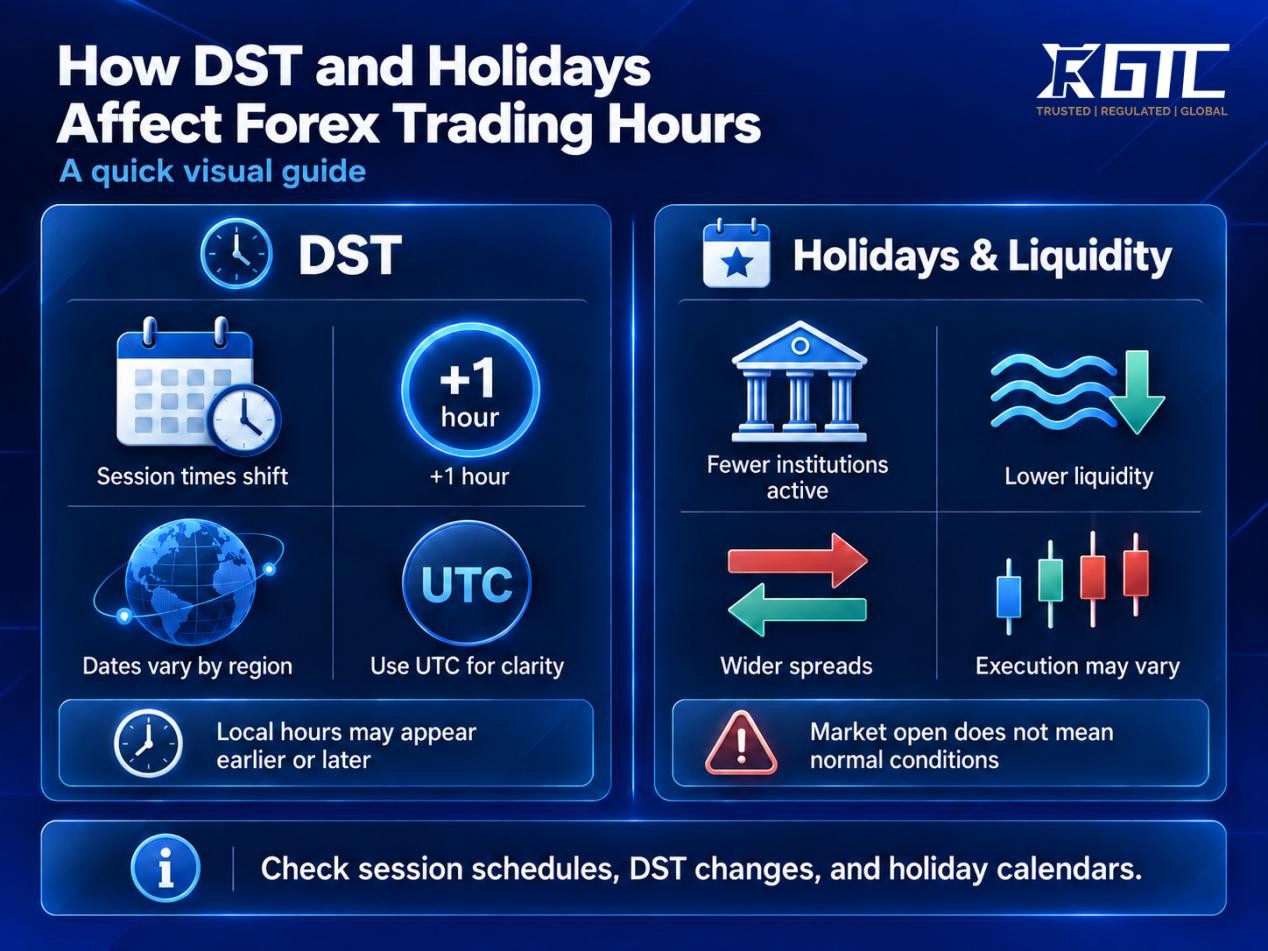
Although the forex market does not completely close because of most regional holidays, liquidity can change when major financial institutions are unavailable. During holidays such as US or UK bank holidays:
For example, when US equity markets close during major federal holidays, broader market participation may also decline.
Traders should consider holiday schedules when evaluating market conditions, especially if their approach relies on short-term execution or high liquidity environments.
GTCFX provides access to global CFD markets, including forex, metals, indices, shares, and other instruments through platforms such as MT4, MT5, and GTC Go. You can explore available tools and market access options based on their own trading preferences and requirements.
The major forex market generally closes after Friday afternoon and reopens on Sunday evening when trading activity begins in Asia-Pacific markets.
During weekends, traditional forex liquidity is limited because major financial centers and institutional participants are not operating normally. Some other markets, such as cryptocurrencies, may follow different trading schedules.
This content is for educational purposes only and does not constitute financial advice. Trading involves significant risk, and you may lose your capital.
GTCFX operates as a multi-regulated group of companies. Clients are kindly advised to confirm the specific legal entity, regulation and jurisdiction under which they are being onboarded.
博客
指数交易对初学者来说可能很有吸引力,因为单笔交易可以提供对一大批公司的敞口,而不仅仅是单只股票。但在下达第一笔订单之前,重要的是要了解指数如何运作、什么推动其价格变动,以及杠杆如何影响收益和损失。
Blogs
Blogs
Blogs