CFD — высокоспекулятивные инструменты с кредитным плечом. Торговля CFD сопряжена с высоким риском для вашего капитала. Перед совершением сделок инвесторам следует убедиться в наличии достаточных знаний о рынке или получить независимую финансовую консультацию.

Назад: Blogs
Long vs Short Position in Trading Which to Choose [2026]Key Takeaways:

Long vs Short Position in Trading: Which to Choose [2026]

Long vs Short Position in Trading Which to Choose [2026]

  • Long position
  • Short position
  • CFDs
Long vs Short Position in Trading Which to Choose [2026]
01SECTION 01

Key Takeaways:

↑

Going long involves buying an asset expecting its value to rise, which is the traditional approach of asset ownership.

↓

Going short means borrowing and selling an asset expecting its price to fall, so you can repurchase it cheaper and pocket the difference.

⚠

A long position carries a strict risk limit (the asset dropping to zero), while a short position exposes traders to theoretically unlimited risk.

⇆

Derivative trading via CFDs (Contracts for Difference) allows you to bypass the complex physical borrowing process when executing short trades.

🛡

Effective directional movement strategies require rigid stop-loss orders and precise position sizing to defend your core capital.

Most new market participants are naturally conditioned to simply buy an asset and wait for it to appreciate. However, professional trading operates bidirectionally.

The terms "long" and "short" simply identify a trader’s directional bias on an asset. Going long vs going short boils down to whether you predict the market is moving upward or downward. Wanna know what and how to invest smartly? This guide might give you some hints.

02SECTION 02

Long vs Short Position: What’s the Difference?

Going long means acquiring an asset with the bullish expectation that its price will increase, while going short involves selling a borrowed asset with the bearish outlook that its price will decrease. The fundamental difference between a long position vs short position is how risk scales and how ownership is structured.

Market View and Action

↑

The bullish execution (Long): Traders execute a long position when macroeconomic data, technical indicators, or company earnings suggest an asset's valuation will grow.

↓

The bearish execution (Short): Traders execute a short position when anticipating a sector downturn, recognizing overbought technical signals, or expecting poor corporate performance.

However, digest this one: Markets do not favor one direction over the other operationally.

03SECTION 03

Traditional Ownership vs. CFD Mechanics

Buying physical shares places the asset directly into your portfolio, granting actual ownership and potential voting rights or dividend payouts.

Traditional shorting is highly complex. It requires holding a specific margin account, locating shares to borrow from your broker, and paying interest to maintain the loan until you cover the position.

Trading Contracts for Difference (CFDs) removes the burden of physical ownership. Merely open a buy or sell contract tracking the underlying asset's real-time price, allowing instantaneous short execution.

04SECTION 04

What Is the Risk Sigh?

Long

The hard floor of going long: A long position possesses a natural, absolute floor; the maximum loss is strictly limited to your invested capital because a stock price cannot drop below zero.

Short

The unlimited ceiling of shorting: A short position carries theoretically infinite risk because there is no mathematical limit to how high an asset's price can surge against your bearish bet.

Margin

Margin calls and maintenance: Due to unlimited upside risk, brokers strictly monitor short positions; if your account equity falls below the maintenance margin (often 50%), the broker might automatically liquidate your position at a loss.

05SECTION 05

Practical Directional Trading Guide

Well, 3 rules: systematically confirming the market trend, mathematically sizing their exposure, and strictly deploying defensive stop-losses. A practical directional trading guide relies on structural discipline rather than emotional prediction.

06SECTION 06

Trend Identification and Sizing

01

Validating the market bias: Utilize technical tools like the 200-day Simple Moving Average (SMA) to confirm if the asset is in an established structural uptrend or downtrend.

02

The 1-2% defense rule: Before identifying profit targets, calculate your maximum exposure so that a triggered stop-loss never costs more than 1% to 2% of your total account equity.

03

Calculating the lot size: Adjust your specific contract or share quantity based on the distance between your entry price and your stop-loss, ensuring the math strictly aligns with the 1-2% rule.

07SECTION 07

Hard Stop-Losses and Leverage Control

■

The circuit breaker protocol: It is mandatory to place a hard stop-loss order the exact moment you enter the market to protect against sudden price gaps.

⚲

Dynamic stop placement: Position your stop-losses just beyond established support levels (for long positions) or resistance levels (for short positions) rather than using arbitrary percentage drops.

⚡

Volatility-adjusted leverage: While leverage amplifies gains, over-leveraging during high volatility is the primary catalyst for account liquidation; scale down your leverage ratio during major economic data releases.

08SECTION 08

Trade Logging Accountability

✎

Documentation discipline: Record the specific technical and fundamental reasons you chose your directional movement to keep yourself structurally accountable.

👁

Tracking emotional triggers: Logging helps identify psychological patterns, clearly exposing when fear or greed caused you to abandon your trading plan.

↻

Preventing revenge trading: A detailed journal forces a pause after a loss, physically preventing the chaotic urge to immediately open a reversed position just to win the money back.

09SECTION 09

Which Markets Are Best Suited for Long or 0Short Trading?

Different asset classes exhibit distinct structural behaviors; equities naturally drift upward over long horizons, while forex and commodities are highly cyclical.

📈

Indices and Equities Dynamics

Broad market indices (like the S&P 500) inherently drift higher over decades due to inflation and corporate growth, making them structurally favorable for long-term long positions.

When equities fall, they often drop much faster and sharper than they rise. This aggressive volatility creates highly lucrative, short-term windows for short sellers. If you hold a short position on a physical stock that pays a dividend, you are financially responsible for paying that dividend to the original lender.

⇆

Commodities and Forex Cyclicality

Fiat currencies and raw commodities do not expand infinitely. They oscillate within macro-economic ranges driven by supply, demand, and central bank rates. It is because these markets are cyclical, they provide symmetrical, relatively equal statistical opportunities for both long and short directional strategies.

Commodities like gold and oil react violently to global supply chain disruptions, requiring traders to rapidly adjust their directional bias based on breaking news rather than just technical charts.

Ready to Master Directional Trading?

When you are ready to transition from theory to live execution, GTCFX can help. We provide the technological and regulatory foundation necessary for bidirectional trading.

Test your directional bias today. Download the GTC Go App and open a zero-risk Demo Account to practice executing both long and short positions in real-time market conditions.

11SECTION 11

Frequently Asked Questions on Directional Movement

Mechanically, yes. A long position is defined by limited risk (the price hitting zero) and unlimited reward (infinite price growth). And a short position holds limited reward (the price hitting zero) but unlimited risk (infinite price growth).

12SECTION 12

Reference

Investopedia: Long Position vs. Short Position: What's the Difference?
Investopedia: Understanding the 200-Day SMA: Key Indicator for Market Trends

Disclaimer:

The information provided is for educational purposes only and does not constitute financial advice. Market conditions change rapidly, and individual financial situations vary. Always consult with a certified financial planner or advisor before making investment decisions.

Поделиться статьёй

Другие материалы: Blogs

How to Make a Forex Withdrawal on GTC Go (GTCFX Guide)?

Blogs

How to Make a Forex Withdrawal on GTC Go (GTCFX Guide)?

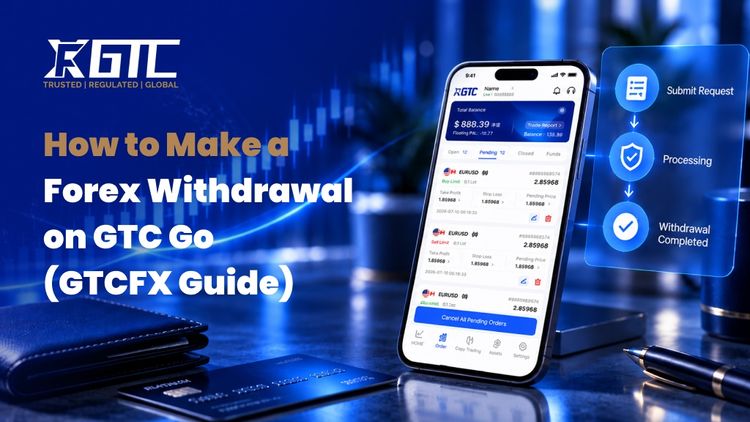
GTC Go is GTCFX's mobile trading app, giving traders quick access to accounts, markets, and fund management. As a regulated forex broker, GTCFX aims to make every forex withdrawal on GTC Go simple and secure.

How to Deposit Money into GTCFX-A Step-by-Step Guide?

Blogs

How to Deposit Money into GTCFX-A Step-by-Step Guide?

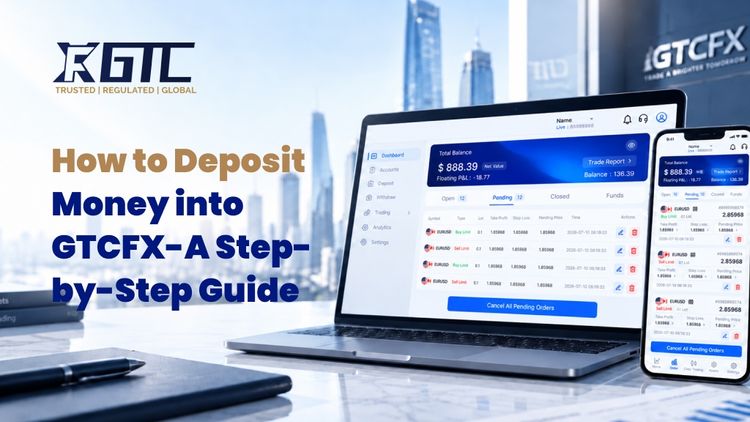
Depositing funds into your trading account is an essential step before you start trading with GTCFX. This guide explains how to deposit money into GTCFX, including available payment methods, processing times, fees, and key considerations to help you complete your deposit smoothly.

When Does Forex Market Open? (2026 Update)

Blogs

When Does Forex Market Open? (2026 Update)

Learn when the forex market opens and closes, how Sydney, Tokyo, London and New York sessions work, and how overlaps, DST and holidays affect trading activity.

10 Best Forex Trading Indicators and How to Use Them

Blogs

10 Best Forex Trading Indicators and How to Use Them

In forex trading, timing can make the difference between a smart entry and a costly mistake. But with prices moving constantly, how can traders spot meaningful opportunities without relying on guesswork? That’s where forex trading indicators come in. From identifying trends and momentum to measuring volatility and potential reversals, the right indicators can help you make more informed decisions.

What Is the Strongest Currency in the World?

Blogs

What Is the Strongest Currency in the World?

Explore the strongest currencies in 2026 by nominal value, including the Kuwaiti dinar, Bahraini dinar, Omani rial, Jordanian dinar and British pound, plus the factors that influence currency strength and forex trading.

How to Trade Oil CFDs: A Step-by-Step Guide for Beginners

Blogs

How to Trade Oil CFDs: A Step-by-Step Guide for Beginners

When you trade an oil CFD you take a position on a crude futures price without owning or receiving any oil. Three things decide whether the trade works: understanding what moves the price, sizing the position for oil's daily range rather than a currency pair's, and knowing what happens when the underlying contract expires.

Your First Step Into Indices Trading-What New Traders Should Know Before Starting

Blogs

Your First Step Into Indices Trading-What New Traders Should Know Before Starting

Indices trading can look appealing to beginners because a single trade can provide exposure to a broad group of companies rather than one individual stock. But before placing your first order, it is important to understand how indices work, what moves their prices, and how leverage can affect both gains and losses.

Forex Spread Explained: What You Really Pay Per Trade

Blogs

Forex Spread Explained: What You Really Pay Per Trade

The spread is the gap between the price you can buy at and the price you can sell at, and you pay it on every trade. In money terms it is (spread in pips) x (pip value for your lot size). On top of it sit commission, overnight financing and a handful of charges that never appear in the quote. Which of these dominates depends entirely on how long you hold positions.

Как включить режим без свопов — быстро и прозрачно

Простая активацияСвяжитесь с нами, и наша команда возьмёт остальное на себя. Без бумажной волокиты и скрытых этапов — просто удобный запрос.
Как активировать режим без свопов?Обратитесь в поддержку через онлайн-чат или электронную почту. Мы проверим ваше соответствие требованиям и после подтверждения активируем режим без свопов на счёте.